
A power bank is the one accessory people buy twice: once badly, then again properly. The first one is usually chosen on looks or on whichever number sounded biggest on the box. The second is chosen after a dead phone at an airport gate. If you sell portable power, understanding that arc is the whole opportunity, because the customer who has been burned once asks much better questions the second time.
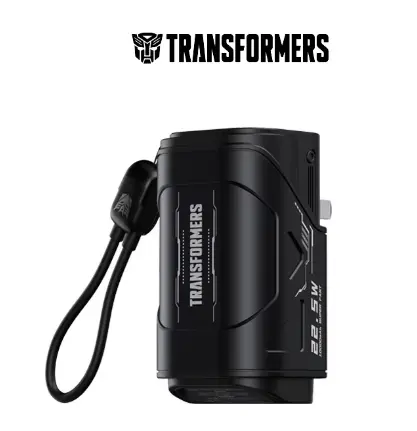
Capacity is a budget, not a promise
The capacity printed on a power bank is the energy stored in its cells. What reaches a phone is always less, and that is physics rather than marketing dishonesty. Voltage has to be converted, and conversion gives off heat. A useful mental model for customers: treat the printed capacity as a fuel tank, and expect real-world range to fall somewhat short of the sticker, exactly as it does with a car.
This matters commercially because it reframes the conversation away from a pure numbers race. A well-built unit that converts efficiently and holds up over hundreds of cycles serves a customer better than a bigger, cheaper pack that sags after a season. When you are buying for resale, ask suppliers about cell quality and cycle life, not just headline capacity.
Match the size to the trip, not to the spec sheet
- Daily carry. A slim pack that tops a phone back up once, and disappears in a pocket. Weight matters more than capacity here — anything heavy gets left at home, which makes it useless.
- Overnight and weekend. Enough to cover a couple of devices without hunting for an outlet. This is the sweet spot for most retail buyers.
- Long haul and outdoors. Larger packs with multiple ports, where bulk is an accepted trade for endurance.
Most returns and bad reviews come from a mismatch here rather than from a defective unit. A commuter sold a heavy expedition pack is unhappy, and so is a camper sold a keyring-sized one.
Flying with a power bank: the rules travellers keep getting wrong
Lithium batteries are treated as dangerous goods in aviation, and the rules are consistent on the points that matter most:
- Carry-on only. Spare batteries and power banks belong in the cabin, not in checked luggage. If a cell fails, crew can reach it.
- Terminals protected. Keep the unit in a pouch or original packaging so the ports cannot short against keys or coins.
- Capacity limits apply. Airlines cap the energy a passenger may carry, and larger packs may need approval or be refused outright. Limits and paperwork differ between carriers and change over time.
Always point customers to their specific airline's dangerous-goods page before they fly. That single sentence in a product listing or a pre-travel email prevents confiscations, and customers remember the retailer who warned them.
Ports, cables and the invisible bottleneck
A capable power bank paired with a worn-out cable delivers a disappointing experience, and the customer almost always blames the battery. Cables are consumable: they get bent at the connector, tugged from beds and wound too tightly. If you sell power banks, selling a decent charging cable alongside them is not an upsell so much as a way to protect your own review score.
Check what the pack actually supports for charging itself, too. A large battery that refills slowly is a frustrating product no matter how much it holds, because it spends its life half-empty.
What to look for when buying for resale
- Honest, consistent labelling across the box, the unit and the listing.
- Sensible protection — over-charge, over-discharge, short-circuit and thermal cut-offs.
- A charge-level indicator. Trivial to add, and a constant reassurance in daily use.
- Packaging that survives transit, especially if you ship rather than sell in person.
- A supplier who answers questions in writing. Vague answers before the sale become silence after it.
Caring for a pack so it lasts its full life
Lithium cells age whether or not you use them, but how they are treated changes the pace considerably. Three habits are worth printing on a care card and handing to every customer:
- Avoid extremes of temperature. A power bank left on a dashboard in summer, or charged while frozen, ages far faster. Heat is the single biggest enemy of battery longevity.
- Do not store it empty for months. A pack left fully flat in a drawer can discharge to a level it never recovers from. Around half charge is a kinder resting state for long storage.
- Charge it occasionally even when unused. A top-up every few months keeps the cells healthy and, just as importantly, means the thing is actually charged when an emergency arrives.
Retailers who explain this get fewer "it stopped holding charge" complaints in year two, and those complaints are the ones that generate the harshest reviews because the customer feels the product failed prematurely.
Spotting a pack that is not what it claims
The portable power market has a long history of overstated capacity, and the tells are reasonably consistent. Be wary when a unit is suspiciously light for its claimed capacity — cells have mass, and physics does not negotiate. Treat unbranded cells, absent safety markings and packaging with no importer details as warning signs rather than cost savings.
If you are sourcing for a shop, buy a sample before you buy a pallet, and put it through a few full cycles. A supplier who is comfortable with you testing first is usually a supplier worth keeping.
Merchandising that actually converts
Portable power sells best next to the thing it rescues. Place packs beside wireless earbuds, smartwatches and travel accessories rather than isolating them in an accessories bin. Bundling a pack with a cable removes the follow-up trip that customers often never make, and it lifts basket value without discounting.
Browse the current AJ Tech range to see which sizes fit your customers, or get in touch about wholesale pricing if you are stocking for a store.
The short version
Sell on fit rather than on the biggest number. Be honest that stored capacity and delivered capacity differ. Warn travellers about carry-on rules before they are standing at security. Pair every pack with a cable that can keep up. Do those four things and portable power becomes one of the most repeatable, least returned categories on your shelf.