
"Supports fast charging" is on every charger box — and it means almost nothing on its own. To actually charge your phone in 30 minutes, you need the right wattage, the right protocol, and a cable that can carry the power. Here's the short version of each.
Watts: the simplest number to watch
Watts (W) measure the power a charger can deliver. Higher W means faster charging up to a ceiling set by your device. A few common targets:
- Smartphones: 18–25 W handles most modern phones. Higher-end phones can accept up to 45–65 W with the right charger and cable.
- Tablets: 20–30 W is typical. An iPad Pro or Android tablet can pull up to 45 W.
- Ultrabooks: 45–65 W. A MacBook Air is happy on 30 W but charges faster at 65 W.
- Gaming laptops / workstations: 100 W minimum. Many require their barrel charger, not USB-C.
Buying a 65 W charger for a phone isn't wasteful — the charger only delivers what the phone asks for. But buying a 20 W charger for a laptop just means your laptop charges slowly (or not at all during heavy use).
PD vs Quick Charge: pick one
Two competing protocols run underneath the wattage number:
- USB Power Delivery (USB PD) is the open industry standard. Every USB-C port and nearly every modern device supports it. PD 3.0 scales to 100 W; PD 3.1 scales to 240 W.
- Quick Charge (QC) is Qualcomm's proprietary standard, mainly used by Android phones that use Qualcomm chips. QC 4+ and QC 5 are backward-compatible with PD.
For almost every use case today, buy USB PD. It's universal, safe, and works with iPhone, iPad, MacBook, most Android phones, tablets, earbuds, and accessories.
Single port vs multi-port: the math matters
A 65 W single-port charger delivers 65 W to that one port. A 65 W dual-port charger typically delivers up to 45 W to one port or splits into 45 W + 20 W when both are used. The split can differ between brands — always read the port-by-port spec, not just the total.
For a travel kit, a 3-port 65 W GaN charger (using gallium nitride chips for compactness) replaces a laptop brick, a phone charger, and a separate adapter for earbuds or a watch. One plug in the hotel wall, three devices charging.
The cable matters (really)
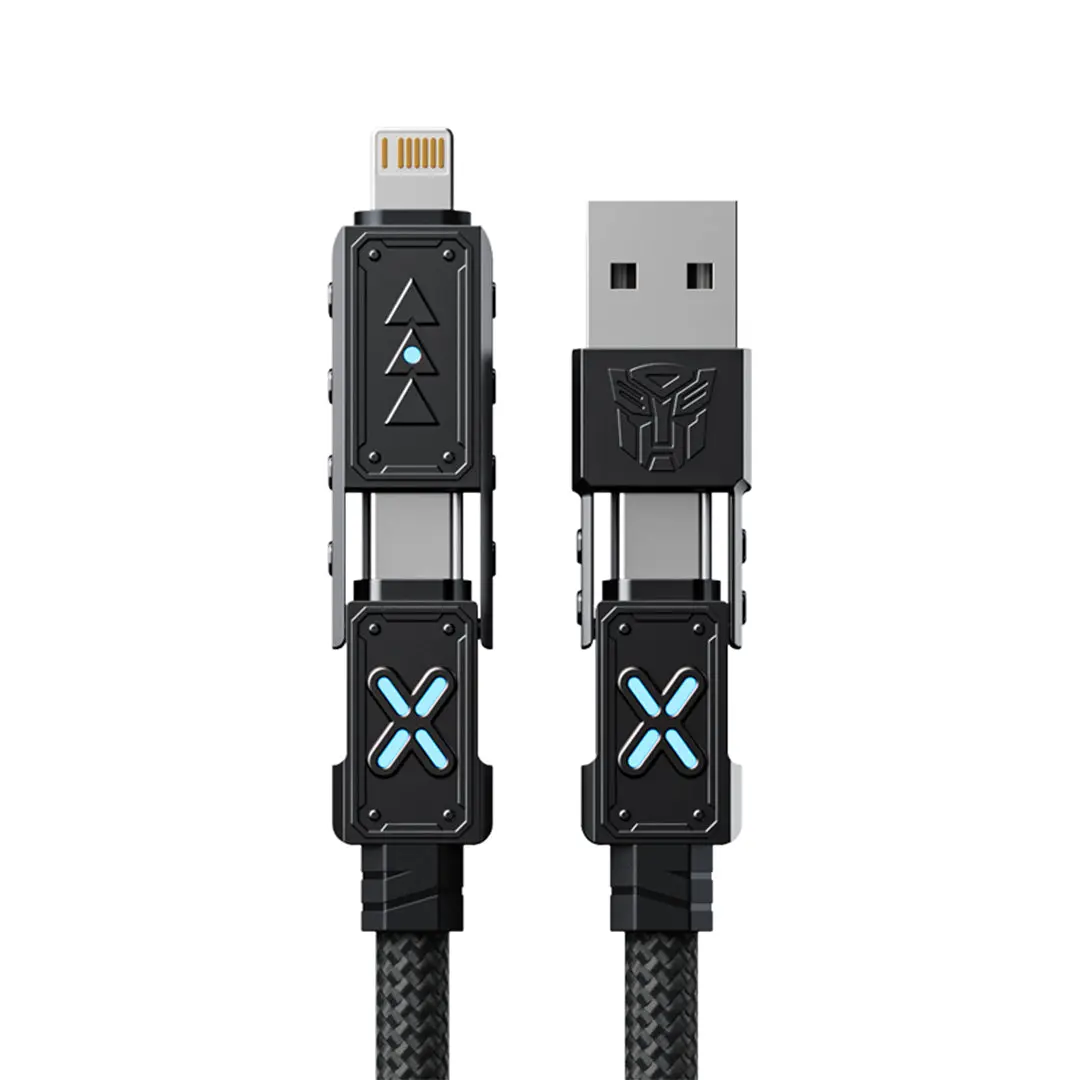
A 100 W charger with a cheap 60 W cable is a 60 W charger. For laptop-class charging, pair the block with a USB-IF certified USB-C cable rated for your target wattage. A good braided cable is a one-time purchase that lasts years.
What to buy
Most households need two things:
- A compact 30–45 W PD charger for phones, tablets, and earbuds — one per room.
- A 65+ W multi-port PD charger for travel and for charging a laptop alongside a phone.
Browse AJ Tech charging blocks and cables. For wholesale buyers, our Wholesale Onboarding form gets you pricing within two business days.